
Understanding Running Pace
One of the first things you’ll hear runners talk about is pace. Pace is simply how fast you run and is usually measured in minutes per mile. For example, if it takes you 13 minutes to run one mile, your pace is 13:00 per mile.
If you’re new to running, don’t worry about how your pace compares to anyone else’s. Your pace is your pace, and every runner starts somewhere. The goal is to become a little stronger and a little faster over time.
Many runners reach a point where their pace seems stuck. They run the same speed week after week and wonder why they aren’t improving. The good news is that with the right training, almost everyone can increase their pace.
Three Important Running Paces
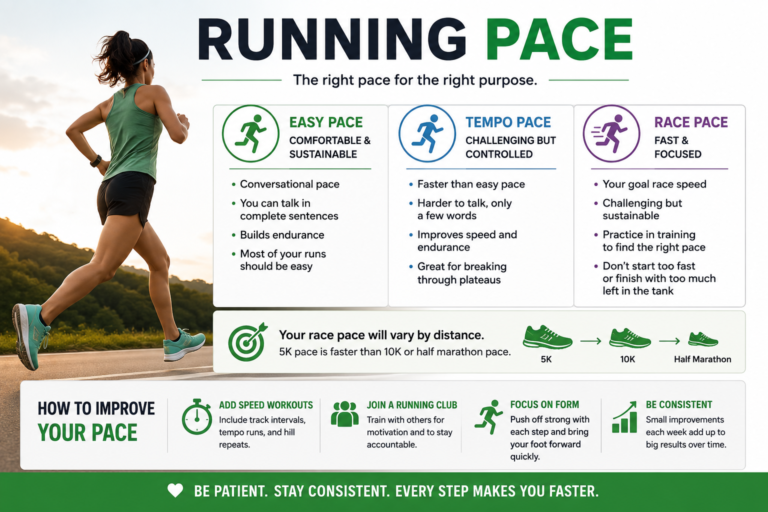
Easy Pace
An easy pace is your comfortable, conversational pace. You should be able to talk in complete sentences while running. Most of your training should be done at this pace because it builds endurance, strengthens your heart and muscles, and helps reduce the risk of injury.
Tempo Pace
A tempo pace is faster than your easy pace but not an all-out effort. You should be breathing harder and only able to speak a few words at a time. Tempo runs teach your body to maintain a faster speed for a longer period. They are one of the best workouts for runners who feel like they’ve stopped getting faster.
Race Pace
Race pace is the speed you plan to maintain during a race. It should feel challenging but sustainable from start to finish. One of the biggest mistakes new runners make is starting too fast and running out of energy before the finish. On the other hand, you don’t want to cross the finish line feeling like you had plenty left in the tank. Practicing race pace during training helps you find the right balance.
Keep in mind that your race pace will vary depending on the distance. Your 5K pace will naturally be faster than your 10K or half marathon pace.
How to Improve Your Pace
If you’ve been running at the same pace for months, don’t get discouraged. Improving your pace takes patience, consistency, and the right mix of workouts.
One of the most effective ways to get faster is to include speed workouts, such as track intervals, in your training. Running with a local running club can make these workouts even more effective. Training alongside runners of different abilities provides motivation and encourages you to maintain a faster pace than you might achieve on your own.
Another tip that has helped me is to focus on my running form. Instead of simply thinking about moving my legs faster, I concentrate on pushing off firmly with my foot at the end of each stride. Then I quickly bring my foot forward for the next step. This simple adjustment helped me generate more power with every stride and gradually improve my pace.
Remember, pace improvements rarely happen overnight. Even reducing your pace by 10 to 20 seconds per mile is significant and can make a noticeable difference on race day. Celebrate those small improvements—they add up over time.
Whether your goal is to finish your first 5K or finally break through a pace you’ve been stuck at, consistent training and patience will get you there. Every faster mile starts with the decision to keep showing up.