
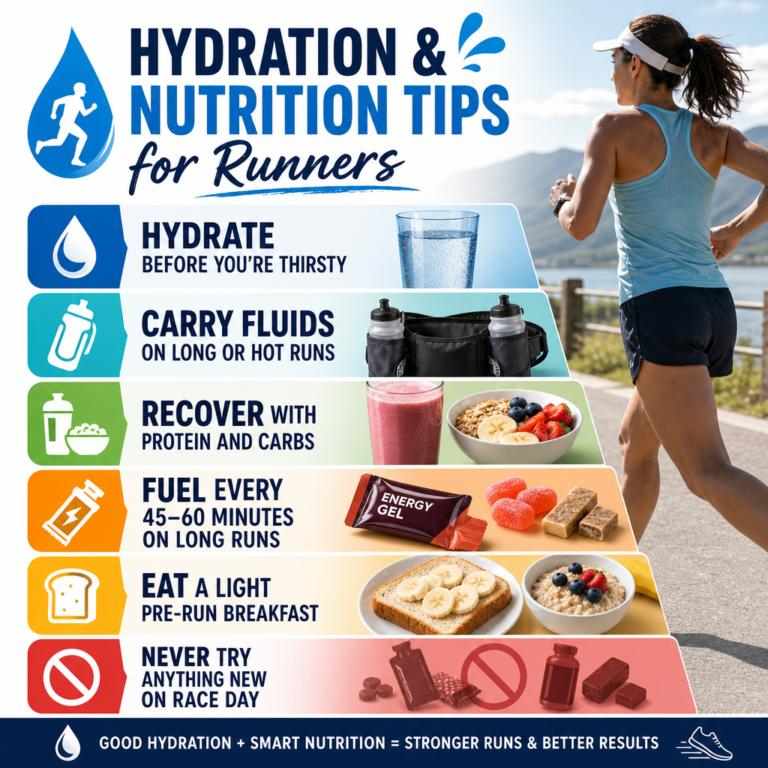
Hydration and Nutrition
One of the questions new runners ask most often is, “What should I eat and drink before, during, and after a run?” The answer is that every runner is different. What works well for one person may not work for another.
I’m not a nutritionist, and this isn’t medical advice. There are many excellent resources available from sports nutrition experts. The suggestions below are simply the habits that have worked well for me over many years of running.
Stay Hydrated
Even on shorter runs, it’s important to pay attention to hydration, especially during warm weather.
As a general rule, I carry a 12-ounce water bottle water with a sports drink whenever I’m running more than three miles or when the temperature is above 70°F (21°C). Staying ahead of your thirst is much easier than trying to catch up after you’ve become dehydrated.
I also carry a small water bottle during races. Although most races have water stations, I don’t want to spend the race wondering when the next one will appear. Having water available when I need it helps me stay focused on running instead of thinking about being thirsty.
Refuel After Longer Runs
After runs lasting more than an hour, I try to eat or drink something that helps my body recover as soon as possible. My favorites are chocolate milk or tart cherry juice, both of which provide nutrients that help replenish energy and support muscle recovery.
Fuel During Long Runs
For runs lasting longer than an hour, I usually eat one Clif Bloks® energy chew about every 45 minutes while continuing to drink my sports drink. This helps replace some of the energy my body is using and keeps me feeling strong throughout the run.
If you’re training for longer races, practice fueling during your training runs so your body gets used to it.
Eat a Balanced Diet
I try to maintain a healthy, balanced diet throughout the year and keep my weight at a level that helps me run comfortably. Good nutrition isn’t just about race day—it’s part of building a healthy running lifestyle.
Preparing for a Marathon
When training for a marathon, I gradually increase my carbohydrate intake during the week leading up to the race. The night before, I prefer a light meal that gives me energy without leaving me feeling overly full or bloated the next morning.
My Pre-Run Breakfast
Before most morning runs, I keep things simple:
- A cup of coffee
- Toast or english muffin with peanut butter
It’s a breakfast that has worked well for me over the years and gives me enough energy without upsetting my stomach.
Never Try Anything New on Race Day
One of the best pieces of advice I can give any runner is this:
Never try a new sports drink, energy gel, chew, or pre-race meal on race day.
Always test new foods and drinks during training runs. If something doesn’t agree with your stomach, you’ll be glad you discovered it during training instead of in the middle of a race.
Find What Works for You
Every runner is unique. Your age, fitness level, the weather, and the length of your run all affect how much food and fluid you need. Use these suggestions as a starting point, pay attention to how your body responds, and don’t be afraid to make adjustments.
The goal isn’t to copy someone else’s nutrition plan—it’s to discover the routine that helps you feel your best, recover well, and enjoy running for years to come.